






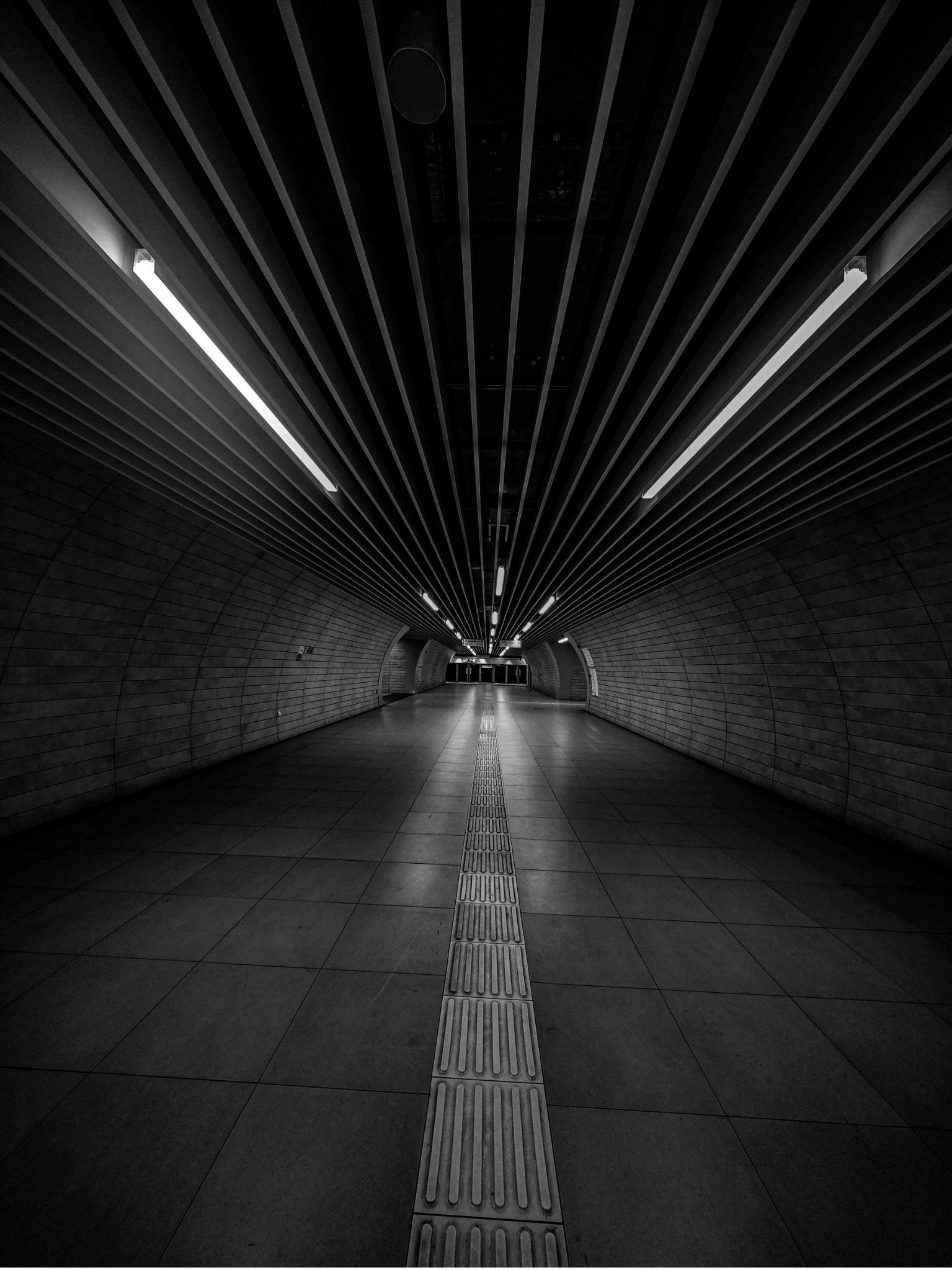
The Creative Void Is Not a Problem to Solve. Here’s How to Move Through It.
April 25, 2026
There’s a particular kind of discomfort nobody really prepares you for. You’ve outgrown the old thing, the job, the business, the version of yourself you’d been performing for years, but the new thing hasn’t taken shape yet. You’re in the creative void: that strange, fertile, deeply uncomfortable in-between space where you’re no longer who you were and not yet who you’re becoming.
It’s one of the most disorienting places a person can be. And almost nothing in the mainstream conversation about business, careers, or creativity speaks to it honestly. We’re saturated with content about strategy, messaging, and launches, all of which assume you already know what you’re building. But what about the season before that? The dark, directionless stretch where the canvas is blank and the possibilities feel more terrifying than exciting?
That’s what this is about.
What the Creative Void Actually Is (and Why You’re Not Stuck)
Think of the creative process, and really any meaningful evolution in life or work, as cyclical. Seasonal. There’s no fixed beginning or end, just a rhythm you move through, sometimes slowly, sometimes in a rush, sometimes looping back.
Autumn is the shedding. Something in you has shifted: your values, your vision, your tolerance for how things have been. You realise the current vehicle, whether that’s a career, a business model, or a way of showing up, isn’t going to get you where you actually want to go. So things start to fall away.
Winter is the void. You’re no longer who you were, but the new version of you hasn’t arrived yet. It’s a pause, a stillness, an identity gap that can feel like crisis if you don’t understand what it is.
Here’s the reframe that changes everything: the void isn’t a sign that something’s gone wrong. It’s a sign that something significant is being born. The blank canvas isn’t punishment. It’s potential.
The problem is that we’ve been so conditioned to value productivity, output, constant doing, that stillness feels dangerous. And for many people, being in the void is more uncomfortable for everyone around them than it is for them, because the people around them don’t know what to do with someone who doesn’t have a neat answer to “so, what are you up to?”
(Hint: “I’m in a strategic transition” is a perfectly complete answer. You don’t owe anyone the full story.)
A Survival Kit for Navigating a Career Transition (or Any Kind of In-Between)
The void doesn’t need to be fought. But it does need to be navigated with some intention. Here’s what actually helps.
Create Safety First
Before anything else, this is a vulnerable time. A lot of what used to hold you in place, the identity, the title, the familiar routines, has loosened. That can feel exposing in ways that are hard to articulate.
Creating safety means being deliberate about your environment: who you’re spending time with, what conversations you’re allowing, and whether your basic survival needs are covered. Financial uncertainty on top of identity uncertainty is a heavy combination. If you’re not sure how you’re going to pay the bills while you’re in the in-between, that needs addressing first. It’s very hard to receive new inspiration when your nervous system is in survival mode.
Also: have a script ready for the inevitable “so what do you do?” question. Something honest but contained, like “I’m in the middle of a really exciting transition right now,” closes the loop without requiring you to perform a certainty you don’t have yet.
Accept That You’re Here
One of the biggest traps in the void is refusing to be in it. Either clinging to the old thing because at least it’s known, or rushing forward into the next thing before you actually know what it is.
Both are understandable. Neither helps.
Launching something new from a place of “I just need to be doing something” before you’ve gotten any real clarity usually means committing to something that’s still rooted in the old version of yourself. Then you end up in another autumn sooner than expected, shedding that thing too, and beginning the whole cycle again.
Acceptance isn’t passive. It’s actually the most strategic thing you can do. When you stop fighting where you are, you free up the energy to be genuinely curious about what’s emerging.
Vision Without Fixating on Outcomes
You probably have glimmers. A sense of how you want to feel, a quality of life you’re craving, a type of work that feels more alive. That’s enough to start with.
The trap here is getting locked into a very specific fixed vision, because in the void, you’re still becoming. The goals that feel clear right now might still be shaped by the old conditioning, someone else’s definition of success dressed up as your own. So hold the vision loosely.
Try describing your ideal future day in vivid, sensory detail. Who are you talking to? How does your morning feel? What’s on your calendar? What are you making or sharing? Then write it in the present tense, as if it’s already real. This isn’t a manifesting exercise in the fluffy sense. It’s a way of connecting to a frequency, a feeling state, rather than a fixed outcome. And once you know the feeling you’re aiming for, you’ll be able to evaluate any new opportunity by asking: would this actually get me there?
📋 ACTION TIME
- Write out your ideal future day in the present tense. Not a five-year plan. Just one day, described as if it’s happening right now. Include how you feel, who you’re with, what you’re creating, how you’re spending your time.
- When someone asks what you’re up to, what’s been your honest reaction? Write yourself a script: a short, true, complete-sounding answer that doesn’t require you to explain everything.
- What are the small sparks you’ve been noticing lately? Things that made you go “hmm, interesting” even briefly. List them without judging whether they’re “the thing.”
The Masculine and Feminine Energy Dance Nobody Talks About
One of the most useful frameworks for surviving the creative void is understanding that creation has two equally essential phases, and Western culture has wildly overvalued one of them.
The outbreath, the masculine energy, is the action, the output, the productivity. The inbreath, the feminine energy, is receptivity, stillness, integration. One is the doing. The other is the being that makes the doing meaningful.
When you’re in the void, you’re in a deeply feminine phase. You’re breathing in. You’re receiving. You’re integrating. And for anyone who’s been rewarded their whole life for achievement and output, that can feel genuinely terrifying, like falling, like failing.
It’s not. It’s the other half of the creative process. The half that charges the outbreath so that when action does come, it’s directional rather than just frantic.
Even the pause between the inbreath and outbreath matters. Sometimes that looks like watching something that doesn’t teach you anything. Sometimes it’s colouring in, or going for a walk, or staring at the wall. That integration time is not wasted. It’s the body and mind doing quiet work that your productivity-brain can’t see or measure.
The masculine and feminine energy balance isn’t something you master once. It’s an ongoing recalibration, a dance you learn to feel your way through rather than control.
Feeling Lost Between Chapters? Get a Creative Outlet (Seriously)
The void tends to arrive when parts of you that have been locked away are asking to come out. The dreamy parts, the idealistic parts, the creative and vulnerable and not-very-professional parts. The ones you learned to tuck away because they weren’t convenient for whoever you were trying to be.
These parts need somewhere to go. And often, the mistake is trying to immediately express them through your work, to redesign the whole business overnight to accommodate all of this unexpressed Self. That’s too big a jump.
A bridge helps more. A creative outlet that has no agenda: a private journal, a Substack nobody’s reading yet, an art form you haven’t touched since childhood, a hobby that exists purely for the joy of it. These outlets serve a dual purpose. They give the emerging parts of you somewhere to breathe. And they almost always end up informing the direction you actually take next, in ways you couldn’t have predicted or planned.
What did you love before life got heavy? What brought you joy before the responsibilities piled up? That’s where to start.
Minimum Viable Magnetism: Taking Action Without Knowing Everything
Here’s the paradox of the void: you’re not supposed to know the full plan yet, and you’re also not supposed to do nothing.
The bridge between those two is experimentation.
The most useful reframe is from the world of software: the minimum viable product. What’s the smallest, most stripped-back version of this spark that could be shared with one actual human and tested for real? Not the full launch. Not the rebrand. Not the polished offer. The bare-bones version that could exist next week if you committed to it.
Mythic Journey, a core offering built out of years of coaching work, started exactly this way. Not with a full launch strategy, not with months of finessing. With a creative download, three people offered a free pilot, and a commitment to building it quickly enough that the momentum couldn’t stall. Three weeks from idea to live. The experimentation made it real. The minimum viable version made it possible to get feedback before the window closed.
The question for you: of the sparks you’ve been noticing, what would the smallest testable version of one of them look like? Not perfect. Not complete. Just real enough to learn from.
📋 ACTION TIME
- Pick one spark from your earlier list. Chunk it down as far as it will go. What’s the minimum viable version? Who could you share it with this week?
- Where have you been waiting for the full plan before taking any action? What one step could you take right now that would give you actual data to work with?
- Where in your week could you build in more receptivity? Not productivity. Not content consumption. Actual stillness, play, or creative outlet time.
The Dots Will Connect. You Just Can’t See It From Here.
The void is not linear. That’s worth saying plainly, because the mind desperately wants it to be. Three clear steps, each one building on the last, leading logically to the thing.
What actually tends to happen: three steps forward, two back, ten forward, one back, a spell of feeling completely disoriented again, and then, eventually, a clarity that makes the whole messy path suddenly make sense.
Steve Jobs described it as dots. In the moment, the dots seem random, scattered, purposeless. But looking back, they all connected. Every choice, every experiment, every detour, every seemingly lost period was gathering data, building capacity, and positioning you for the thing that eventually arrived.
You’re in the dot-gathering phase. The connections are coming.
Follow the sparks. Trust the stillness. Take the smallest possible next step. And know that the idea you’re meant to birth has its own momentum. Your job is simply to make yourself ready to receive it.
Ready to Map What’s Emerging?
If you’re in the void right now and want support making sense of what’s stirring, the Mythic Journey was built for this exact territory. It’s a guided experience that helps you name your gifts, trace the patterns that have been quietly shaping your path, and create a mythic map of who you’re becoming and how to start moving there. Not a rigid plan. A living compass for the in-between.
The void is not the obstacle. It’s a transition. You’re already further along than you think.






add a comment
+ show Comments
- Hide Comments